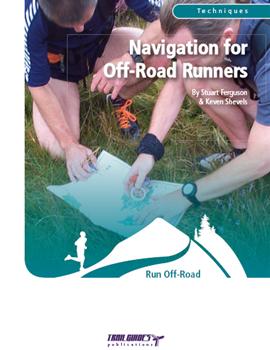
Navigation Techniques for Off-Road Runners
Price: £12.99 each.
Postage:
£1.18 per book to the UK.£1.42 per book to Ireland and Europe.
£2.03 per book to the rest of the World.
Also Available To Download
Download Price: £7.99
With off-road running the ability of knowing where you are going is a fundamental skill. Unfortunately for many runners the secrets of navigation are akin to the secrets of the dark arts of black magic. Specifically with the runner in mind, this book presents in an easy to understand manner all the skills and techniques that are required for the beginner through to the advanced user. 'Navigation for Off-Road Runners' will give you the confidence to go further.
Contents
- Introduction
- What Do We Mean By Navigation
-
Who Uses Navigation and Why
Checkpoints and Controls - Access
-
Tools
Eyes
Maps
Compass
Altimeter
GPS
Red Pen
Roamer
Pacing Scale
Pedometer
Thumb
Map Measurer
Watch
Mapping Software -
Map Reading
Types of Map
Anatomy of a Map
Map Scale
Grid Lines
Contour Lines
Concave and Convex Slopes
Line Features
Contour Features
Point Features
Symbols on Maps
Boundaries
Other Items Shown on Maps
Magnetic Variation
The Importance of Trig Points
The Problem with Maps -
Fundamental Skills
Understanding Grid Numbers
Plotting a Grid Reference onto a Map
Setting the Map
Taking a Bearing
Keeping on Course
Taking a Back-bearing
Re-orienting
Thumbing the Map
Using Features to Monitor Progress
Leapfrogging
Reading the Map While Running
Memorising the Map -
Advanced Skills
Rough and Fine Navigation
Attack Points
Estimating Slope Angle
Resection
Estimating Distance Using Pacing
Estimating Distance Using Time
Estimating Distance by Eye
Which Technique to Use for Estimating
Distance -
Techniques
Handrail Technique
Catching Features
Aiming-off
Running on the Needle
Contouring
Steve’s string
Bob’s law
Stu’s law
Using the other senses -
Route choice
The Basic Route Choice Decisions
Factors That Influence Decision Making
Foreshortening Effect
Recognising Ground and Terrain Types and How They Affect Route Decisions
Breaking a Leg Down into Sections
Gauging Stream Widths
The Effects of Weather on Route Choice - Controls
-
Navigating in Darkness and Poor Visibility
Scenarios - Other Problems for Navigation
-
Training and Exercises
Route Notes - Summary
The Walks
Navigation Techniques for Off-Road Runners Photo Gallery
Navigation Techniques for Off-Road Runners Reviews
A book entitled ‘Navigation for Off-Road Runners’ recently came into my possession and after reading it I thought it would be worth reviewing for the benefit of others. The authors are probably known to many in the fell running world, especially those that have raced in the North East: Keven Shevels and Stuart Ferguson certainly have the right credentials for writing on this topic as they organise navigation training events and it is from these events that the Trailguides™ series of publications, of which this is the latest, was born.
I believe this is the lengthiest tome in that series consisting of 168 pages and 15 chapters. Topics in this book include map reading whilst running, contouring, and night navigation, amongst numerous other navigational skills. Each section is usefully annotated as either basic, intermediate or advanced level.
The book also includes a few introductory chapters of general interest about off-road running. Some of the material may seem like stating the obvious but you must remember that it is aimed at those with a wide range of abilities from novice to expert. I am sure that even the most experienced navigators will learn something from this book. For example, useful tips include using your thumb to track your progress on the map as you run, and navigating to points on a slope from above not from below.
Do I have any criticisms? Well, the feel of the book is a bit ‘home-made’ as evidenced by the reproduction of photos and some of the diagrams. To me this adds a certain charm but I suspect it won’t be to everyone’s taste. As regards the content, I can’t find fault but I am still learning the skill of navigation myself. Is it good value? Well, what does £13 buy you these days: A cheap compass? Two cinema tickets? A round of beers? I think it is excellent value and an ideal present for any fell runner or pursuer of outdoor activities.
Declaration of interest: I count both of the authors amongst my fell running friends but I have no financial interest in this or any related publication.
I believe this is the lengthiest tome in that series consisting of 168 pages and 15 chapters. Topics in this book include map reading whilst running, contouring, and night navigation, amongst numerous other navigational skills. Each section is usefully annotated as either basic, intermediate or advanced level.
The book also includes a few introductory chapters of general interest about off-road running. Some of the material may seem like stating the obvious but you must remember that it is aimed at those with a wide range of abilities from novice to expert. I am sure that even the most experienced navigators will learn something from this book. For example, useful tips include using your thumb to track your progress on the map as you run, and navigating to points on a slope from above not from below.
Do I have any criticisms? Well, the feel of the book is a bit ‘home-made’ as evidenced by the reproduction of photos and some of the diagrams. To me this adds a certain charm but I suspect it won’t be to everyone’s taste. As regards the content, I can’t find fault but I am still learning the skill of navigation myself. Is it good value? Well, what does £13 buy you these days: A cheap compass? Two cinema tickets? A round of beers? I think it is excellent value and an ideal present for any fell runner or pursuer of outdoor activities.
Declaration of interest: I count both of the authors amongst my fell running friends but I have no financial interest in this or any related publication.
The Fellrunner Magazine October 2008
Both of the authors have been involved in outdoor activities for many years, learning their navigational skills at an early age. They have both competed in events ranging from long distance fell and mountain running, to orienteering, to mountain marathons, many of these events requiring a high degree of navigational skills.
This training guide is one of a series produced in collaboration with the Run Off-Road Organisation. The series is designed to promote the sport of off-road running and to encourage participants to improve and develop their abilities and skills.
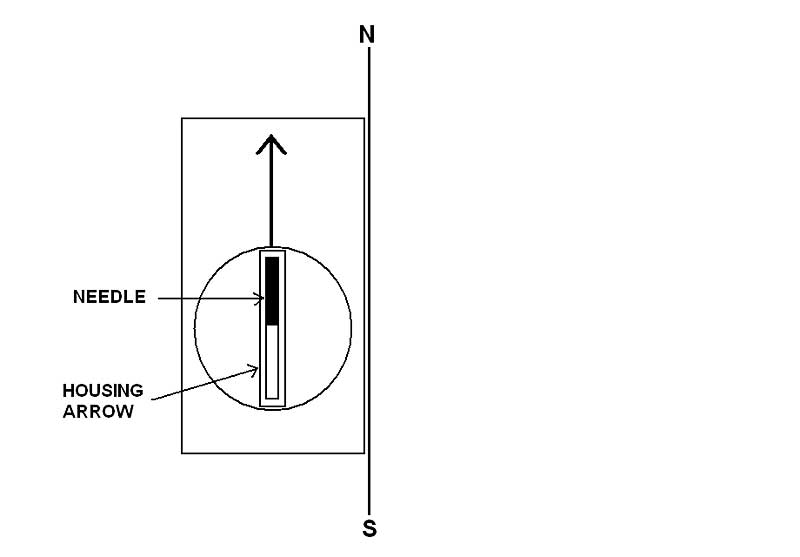
For those runners wishing to add an extra dimension to their running, by just exploring more of the open countryside, or perhaps graduating to competing in mountain marathons, being able to confidently find your way around by reading a map is a fundamental requirement, particularly in bad weather. In this book Stuart and Keven cover in considerable depth, the numerous elements of navigation, from describing the individual parts of a standard compass and their purpose progressing through to the more advance skills and techniques of fine navigation.
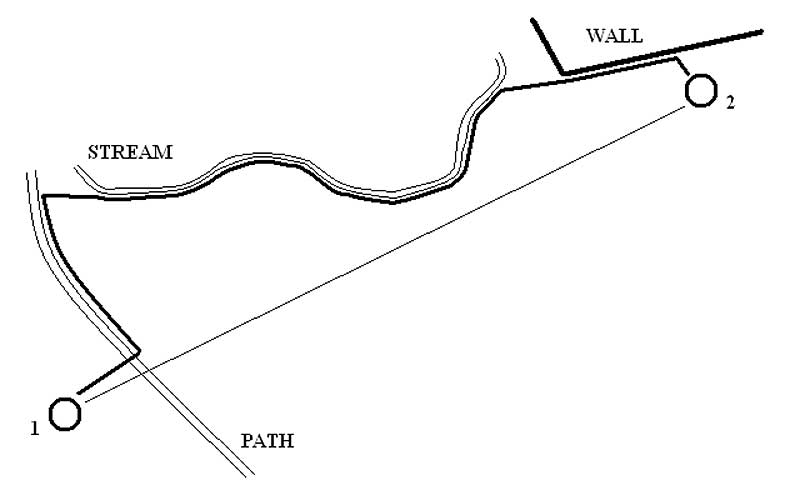
The descriptive text is supported by easy to understand diagrams together with photographs, making it ideal for both the beginner and more advanced user. I would suggest that for those members who have recently attended one of our Navigation Courses, this book would be particularly useful as a backup to the skills they have already attained
This training guide is one of a series produced in collaboration with the Run Off-Road Organisation. The series is designed to promote the sport of off-road running and to encourage participants to improve and develop their abilities and skills.
For those runners wishing to add an extra dimension to their running, by just exploring more of the open countryside, or perhaps graduating to competing in mountain marathons, being able to confidently find your way around by reading a map is a fundamental requirement, particularly in bad weather. In this book Stuart and Keven cover in considerable depth, the numerous elements of navigation, from describing the individual parts of a standard compass and their purpose progressing through to the more advance skills and techniques of fine navigation.
The descriptive text is supported by easy to understand diagrams together with photographs, making it ideal for both the beginner and more advanced user. I would suggest that for those members who have recently attended one of our Navigation Courses, this book would be particularly useful as a backup to the skills they have already attained
Newsletter of the Welsh Fellrunners Association April 2008