About the Guide
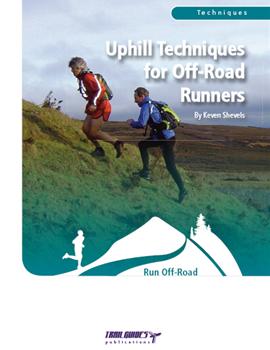
48 page black and white A5 booklet focussing on the techniques, skills and training needed to improve your uphill running.
For those runners who run and race off-road such as those who compete in trail running, fell running, hill running, mountain running and mountain marathons this booklet is essential reading. Running uphill can be the point where many runners start to flag and feel their muscles begin to seize up, by using the correct training sessions and carefully planning the use of hill rep sessions this can be conquered.
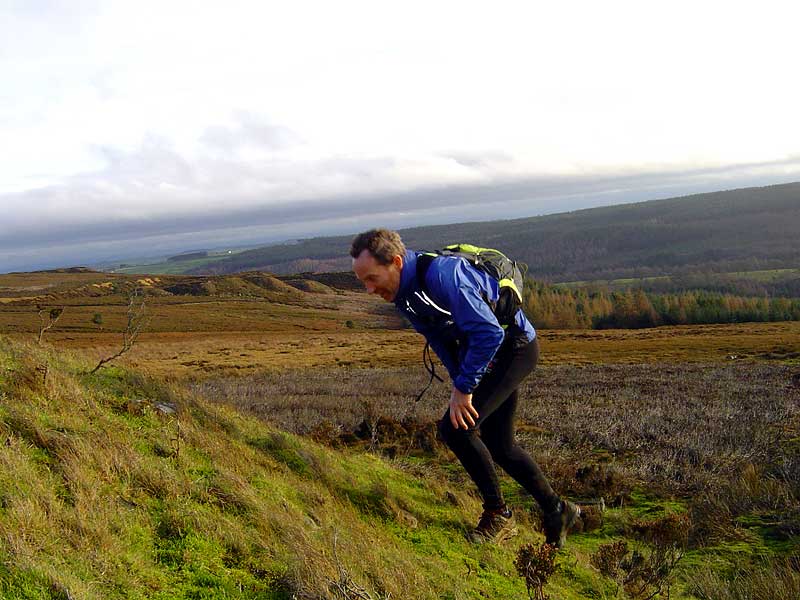
Contained within the pages of this booklet are the keys to such uphill techniques as stride length, foot plant, angle of lean and the use of the hands. Also included is sections on how to condition the body for effective uphill running and also how to construct hill training sessions in particular the use of hill reps and how different lengths and gradients can aid different aspects of your hill running.
Whether you orienteer, trail or fell run, one of the crucial aspects that affects your performance is the ability to run well uphill. All runners know the benefit of hill reps but there is far more to conquering the hills than that.
With the correct conditioning and techniques, running uphill can be changed from your Achilles heel to your most useful tool. This guide will show you how to prepare physically, the techniques to practice and how to construct a training programme that will improve your uphill running.
As the song says, the only way is UP !!!
Contents
- Introduction
- Physical Aspects of Running Uphill
What Happens When You Run Uphill
Conditioning the Body for Running Uphill
Strength
Suppleness - Technical Aspects of Running Uphill
Uphill Techniques
Planning
Route Choice
Balance
Angle of lean
Stride length
Foot plant
Stamina/lactic build-up
Transition
Warming-up
Walking
Hands
Arms
Running with a rucksack
Bodyweight
Mental attitude - Training Sessions for Improvement
Constructing and uphill session
Putting it all together
Shallow climb, good running surface
Medium climb, medium surface
Steep climb, medium surface - Summary